Showing posts with label old poem. Show all posts
Wednesday, January 18, 2023
Sestina Poetry Form
The first time I ever heard of this form was during the Writer’s Digest PAD (poem a day) challenge back in April 2006 and anyone who was reading my blog back then will remember how much I loved it (not!). It’s not really as bad as it looks, in fact the form can be kind of fun.
The Sestina, created by French troubadour Arnaut Daniel, consists of 39 lines divided into 6 sestets and one triplet, called the envoi. It is normally unrhymed - instead, the six end-words of the first stanza are picked up and reused as the end-words of the following stanzas in a specific order. In the envoi, one end-word is buried in each line, and one is at the end of each line.
Lines may be of any length, although their length is usually consistent in a single poem. The six words that end each of the lines of the first stanza are repeated in a different order at the end of lines in each of the subsequent five stanzas.
Since there is no rhyme scheme or syllable count, there’s no point in a schematic, but the pattern of word-repetition is as follows, where the words that end the lines of the first sestet are represented by the numbers "1 2 3 4 5 6":
1 2 3 4 5 6 - End words of lines in first sestet.
6 1 5 2 4 3 - End words of lines in second sestet.
3 6 4 1 2 5 - End words of lines in third sestet.
5 3 2 6 1 4 - End words of lines in fourth sestet.
4 5 1 3 6 2 - End words of lines in fifth sestet.
2 4 6 5 3 1 - End words of lines in sixth sestet.
2 end words - Middle and end words of lines in envoi
Possible formats for the envoi are: 1-2, 3-4, 5-6; 1-4, 2-5, 3-6; 6-2, 1-4, 5-3; or 6-5, 2-4, 3-1
It might be easier to follow along with an example. The six words I used were:
1 truth, 2 grave, 3 life, 4 night, 5 death, 6 stone.
Night Dweller’s Truth
In every breath there is a truth
that overshadows every grave,
a truth not found within a life
that shines its beacon into night,
a knowledge brought about by death
and graven into hardest stone.
A thought that’s carved in precious stone
contains what we perceive as truth,
unsuppressed by certain death,
as cold and alien as the grave,
deep and dark as empty night
just before it bursts to life.
If I’d but know how sweet is life,
not just a pathway strewn with stone,
perhaps I’d not embraced the night
that fills me with its awful truth
and takes me far beyond the grave
out of reach of even death.
And what is that which we call death?
Perhaps another way of life,
the end is more than just the grave,
a fresh turned mound that’s capped with stone.
Perhaps we’ll never know the truth
before we pass into the night.
Come and share this sweetest night
where we can stand abreast of death,
and we will seek the perfect truth
of what is that which we call life
that gathers round us like a stone
and leads us blindly to the grave.
You look at me with visage grave -
accept my words, accept the night,
accept that fate’s not carved in stone.
Turn away from Lady Death,
her promise of the after life,
and know what’s in my heart is truth.
We’ll find our truth without the grave
and make our life within the night,
then vanquish death with shattered stone.
Wednesday, November 7, 2018
National Novel Writing Month
There’s no date on this poem, so I’m not sure when exactly I wrote it, but it has to be at least a couple of years ago. Anyway, given I’m knee deep in my NaNo novel, I thought this was rather appropriate for today’s post.
NaNoWriMo
This is not for the faint of heart
A novel, written in thirty days
November first is when we start.
Just thirty days to do your part
The writing comes in such a haze
This is not for the faint of heart.
Writing itself is quite an art
E’en when done in such a blaze
November first is when we start.
Winning this sets us apart
Writing without hope of praise
This is not for the faint of heart .
Some will not finish what they start
Others have their secret ways
November first is when we start.
What wisdom is there to impart
A secret, key, a magic phrase
This is not for the faint of heart
November first is when we start.
Villanelle form
NaNoWriMo
This is not for the faint of heart
A novel, written in thirty days
November first is when we start.
Just thirty days to do your part
The writing comes in such a haze
This is not for the faint of heart.
Writing itself is quite an art
E’en when done in such a blaze
November first is when we start.
Winning this sets us apart
Writing without hope of praise
This is not for the faint of heart .
Some will not finish what they start
Others have their secret ways
November first is when we start.
What wisdom is there to impart
A secret, key, a magic phrase
This is not for the faint of heart
November first is when we start.
Villanelle form
Wednesday, September 19, 2018
Urjuzah Poetry Form
It’s been a while since I’ve done a form here so I think we’re due, don’t you?
The Urjuza is an Arabic verse form, consisting of rhyming couplets done in the rajaz metre. Sounds pretty simple doesn’t it? Except, the rajaz metre is made with lines that are 24 syllables long, divided into two groups of 12 syllables with a caesura, or break, between them.
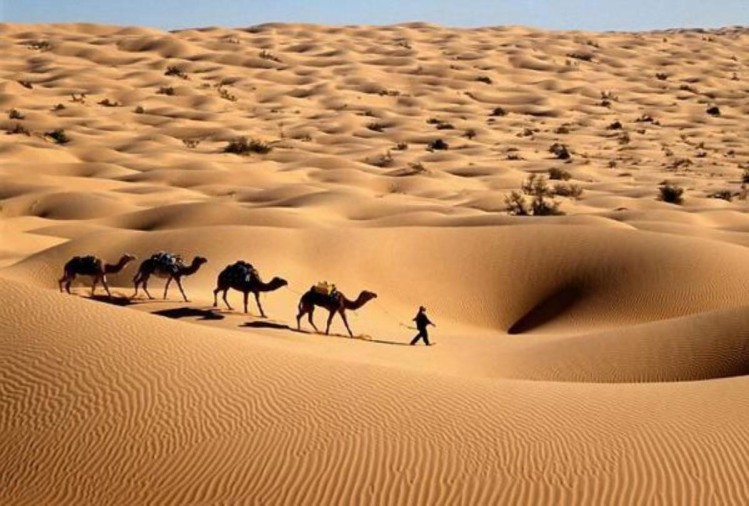
The verse focuses more on the details of content leaving the poem "devoid of stylistic elegance and poetic beauty". The poem served several functions, for example camel drivers’ songs (known as al-ḥidā ), was utilized for verbal display, and other types of didactic and even obscene poetry.
The Urjuza is:
Written in any number of couplets.
Monorhymed or written in rhymed couplets - either aa aa aa etc. or aa bb cc etc .
Written in rajaz meter, which calls for lines of 24 syllables with a caesura at 12 syllables
Once of the sources I checked referenced the UK band, Camel (70s progressive rock), who made an album called Rajaz. They had a very eloquent description of the Rajaz metre:
The music of poets once carried caravans across the great deserts.
Sung in a simple metre of the animal's footsteps, it transfixed weary travellers on their sole objective... journey's end.
The poetry is called 'rajaz'. It is the rhythm of the camel.
You can check out their Rajaz site HERE.
I freely admit my example isn’t a brand new one, I wrote it many years ago. I recall enjoying writing in this form though, I mean other than having to come up with 24 syllables per line all I had to worry about was the rhyming of the couplets.
Unfortunately, my HTML skills have kind of atrophied from lack of use and I was not able to indent the second part of each line without changing the html coding for the whole blog, and I didn’t think it was worth the trouble for one poem. So you’ll have to use your imaginations for the formatting. Basically, the second part of each line should be indented. :-D
A desert wind blows across the skin of my dreams,
winding its way across dunes of lost words and deeds.
A desert sun sets fire to my imagination,
burning away reality until it bleeds.
A desert day can burn itself into your mind,
until you no longer see what the pen has wrought.
A desert rain can sweep the landscape of changes,
dark words scudding across the sky in clouds of thought.
A desert night will cool the burning of the soul,
with sibilant whispers of things that could not be.
A desert night can rain down stars of poetry
sweeping the landscape in a storm you cannot see.
The Urjuza is an Arabic verse form, consisting of rhyming couplets done in the rajaz metre. Sounds pretty simple doesn’t it? Except, the rajaz metre is made with lines that are 24 syllables long, divided into two groups of 12 syllables with a caesura, or break, between them.
The verse focuses more on the details of content leaving the poem "devoid of stylistic elegance and poetic beauty". The poem served several functions, for example camel drivers’ songs (known as al-ḥidā ), was utilized for verbal display, and other types of didactic and even obscene poetry.
The Urjuza is:
Written in any number of couplets.
Monorhymed or written in rhymed couplets - either aa aa aa etc. or aa bb cc etc .
Written in rajaz meter, which calls for lines of 24 syllables with a caesura at 12 syllables
Once of the sources I checked referenced the UK band, Camel (70s progressive rock), who made an album called Rajaz. They had a very eloquent description of the Rajaz metre:
The music of poets once carried caravans across the great deserts.
Sung in a simple metre of the animal's footsteps, it transfixed weary travellers on their sole objective... journey's end.
The poetry is called 'rajaz'. It is the rhythm of the camel.
You can check out their Rajaz site HERE.
I freely admit my example isn’t a brand new one, I wrote it many years ago. I recall enjoying writing in this form though, I mean other than having to come up with 24 syllables per line all I had to worry about was the rhyming of the couplets.
Unfortunately, my HTML skills have kind of atrophied from lack of use and I was not able to indent the second part of each line without changing the html coding for the whole blog, and I didn’t think it was worth the trouble for one poem. So you’ll have to use your imaginations for the formatting. Basically, the second part of each line should be indented. :-D
A desert wind blows across the skin of my dreams,
winding its way across dunes of lost words and deeds.
A desert sun sets fire to my imagination,
burning away reality until it bleeds.
A desert day can burn itself into your mind,
until you no longer see what the pen has wrought.
A desert rain can sweep the landscape of changes,
dark words scudding across the sky in clouds of thought.
A desert night will cool the burning of the soul,
with sibilant whispers of things that could not be.
A desert night can rain down stars of poetry
sweeping the landscape in a storm you cannot see.
Wednesday, July 18, 2018
Creation and Creator
As you may or may not know, I used to belong to a local poetry group. Aside from doing readings, the group would gather in the upstairs of a local pub once a month where we would read poems in progress, have a drink, and generally chat about poetic things. We also had “poemwork.” This is purely optional, but most of us participated because one, it was fun, and two, sometimes you end up with an unexpected poem. Today I’d like to share one of these assignments.
Poemwork: Make a poem out of a collection of dictionary definitions.
Sources:
Merriam-Webster On-line dictionary
Family Word Finder – Reader’s Digest Books, 1976
Words looked up: underworld, creation, provident, fanatic, skeptic, heaven, hell
creation and creator
in the nether realm of the devil and the demons
lies the place of departed souls
a social sphere below the level of ordinary life
a place or state of misery, torment, or wickedness
it lies on the side of the earth opposite to this one
the nether world in which the dead continue to exist
the damned suffer everlasting punishment
in these regions of Hell
the Norse goddess of death
is bringing the world into ordered existence
the Deity’s all-foreseeing care over the cosmos
has her acting without a prearranged script or plan
other goddesses, whose worship involved frenzy
descend in one way or another
not seeing beforehand
the act of creating, the act of making
a person disposed to skepticism
can make ready for the future
but absolute knowledge is unattainable
and judgements must be continually questioned
with God, sin is absent over the earth
there is a spiritual state of everlasting communion
in the arch of the sky, the dwelling place of the Deity
the world under Heaven is a condition of utmost happiness
Poemwork: Make a poem out of a collection of dictionary definitions.
Sources:
Merriam-Webster On-line dictionary
Family Word Finder – Reader’s Digest Books, 1976
Words looked up: underworld, creation, provident, fanatic, skeptic, heaven, hell
in the nether realm of the devil and the demons
lies the place of departed souls
a social sphere below the level of ordinary life
a place or state of misery, torment, or wickedness
it lies on the side of the earth opposite to this one
the nether world in which the dead continue to exist
the damned suffer everlasting punishment
in these regions of Hell
the Norse goddess of death
is bringing the world into ordered existence
the Deity’s all-foreseeing care over the cosmos
has her acting without a prearranged script or plan
other goddesses, whose worship involved frenzy
descend in one way or another
not seeing beforehand
the act of creating, the act of making
a person disposed to skepticism
can make ready for the future
but absolute knowledge is unattainable
and judgements must be continually questioned
with God, sin is absent over the earth
there is a spiritual state of everlasting communion
in the arch of the sky, the dwelling place of the Deity
the world under Heaven is a condition of utmost happiness
Wednesday, June 6, 2018
Birds of Passage
I’m making a slight change to the line-up here. Two reasons: 1. It’s my blog and I can do what I want, and 2. After four days off I found myself unprepared to present a new form today. So, starting today, the first Wednesday of the month I will share a favorite poem written by someone else, and the last Wednesday of the month will be a new form.
That being said, I have to admit that this was not the poem I had planned on presenting today. There is a poem that was written about what it was like to be the child of a merman, but I could not for the life of me remember who wrote it. This is going to frustrate the heck out of me, and I swear I will find it someday, just not today.
Instead I will offer this one from one of my all-time favorite poets, Henry Wadsworth Longfellow. I love the lyrical quality of his poems and the way they flow. I even used a quote from one of his poems at the beginning of the first book I ever attempted to write. This is not that poem. ;-)
Birds of Passage
Black shadows fall
From the lindens tall,
That lift aloft their massive wall
Against the southern sky;
And from the realms
Of the shadowy elms
A tide-like darkness overwhelm
The fields that round us lie.
But the night is fair,
And everywhere
A warm, soft vapor fills the air,
And distant sounds seem near;
And above, in the light
Of the star-lit night,
Swift birds of passage wing their flight
Through the dewy atmosphere.
I hear the beat
Of their pinions fleet,
As from the land of snow and sleet
They seek a southern lea.
I hear the cry
Of their voices high
Falling dreamily through the sky,
But their forms I cannot see.
Oh, say not so!
Those sounds that flow
In murmurs of delight and woe
Come not from wings of birds.
They are the throngs
Of the poet's songs,
Murmurs of pleasures, and pains, and wrongs,
The sound of winged words.
This is the cry
Of souls, that high
On toiling, beating pinions, fly,
Seeking a warmer clime.
From their distant flight
Through realms of light
It falls into our world of night,
With the murmuring sound of rhyme.
~ Henry Wadsworth Longfellow
That being said, I have to admit that this was not the poem I had planned on presenting today. There is a poem that was written about what it was like to be the child of a merman, but I could not for the life of me remember who wrote it. This is going to frustrate the heck out of me, and I swear I will find it someday, just not today.
Instead I will offer this one from one of my all-time favorite poets, Henry Wadsworth Longfellow. I love the lyrical quality of his poems and the way they flow. I even used a quote from one of his poems at the beginning of the first book I ever attempted to write. This is not that poem. ;-)
Birds of Passage
Black shadows fall
From the lindens tall,
That lift aloft their massive wall
Against the southern sky;
And from the realms
Of the shadowy elms
A tide-like darkness overwhelm
The fields that round us lie.
But the night is fair,
And everywhere
A warm, soft vapor fills the air,
And distant sounds seem near;
And above, in the light
Of the star-lit night,
Swift birds of passage wing their flight
Through the dewy atmosphere.
I hear the beat
Of their pinions fleet,
As from the land of snow and sleet
They seek a southern lea.
I hear the cry
Of their voices high
Falling dreamily through the sky,
But their forms I cannot see.
Oh, say not so!
Those sounds that flow
In murmurs of delight and woe
Come not from wings of birds.
They are the throngs
Of the poet's songs,
Murmurs of pleasures, and pains, and wrongs,
The sound of winged words.
This is the cry
Of souls, that high
On toiling, beating pinions, fly,
Seeking a warmer clime.
From their distant flight
Through realms of light
It falls into our world of night,
With the murmuring sound of rhyme.
~ Henry Wadsworth Longfellow
Wednesday, May 23, 2018
Silent Sentinel
Today I’ve got another oldie but (I hope) a goodie, although it’s only about five years old. I love writing about the supernatural or the mythological, and you’ll often find them as themes running through my poetry.
Silent Sentinel
I remember my birth
torn from the quarry
then found to be unfit for the stone circle.
I remember the superstitions,
the Wild Hunt's ride, sacrifices to beg a boon
the dancing and the Green Man's bride.
I remember the poets,
who spent years perfecting the faultless rhyme
that would make of them heroes
I remember the old gods
no longer worshipped, not knowing why,
turning their backs on man.
I have felt the passage of time
felt the reshaping of my limestone form
awakened in my new home atop the cathedral
I have watched the world turn
the pleasure and the sorrow of man
the life and the death. Oh, so much death.
I have watched the city rise and fall
the new replacing the old until only I remain
keeping your secrets carved in stone.
Silent Sentinel
I remember my birth
torn from the quarry
then found to be unfit for the stone circle.
I remember the superstitions,
the Wild Hunt's ride, sacrifices to beg a boon
the dancing and the Green Man's bride.
I remember the poets,
who spent years perfecting the faultless rhyme
that would make of them heroes
I remember the old gods
no longer worshipped, not knowing why,
turning their backs on man.
I have felt the passage of time
felt the reshaping of my limestone form
awakened in my new home atop the cathedral
I have watched the world turn
the pleasure and the sorrow of man
the life and the death. Oh, so much death.
I have watched the city rise and fall
the new replacing the old until only I remain
keeping your secrets carved in stone.
Wednesday, May 16, 2018
Quatern
Today’s poetry form is the Quatern. As you might guess from the title, it has four verses of four lines each. This French form does not have a set meter, but each line must have eight syllables. There is also a descending repeated line throughout the poem. Line 1 repeats as line 2 in the second verse, as line 3 in the third verse, and as line 4 in the fourth verse.
Even though this form isn’t required to rhyme, my example just seemed to do so naturally. What can I say, rhyming’s in my blood. ;-)
Moonsong
On summer nights the moonlight sings
And seeks you out on phantom wings
Inviting you to come and play
Beneath the stars till light of day.
No matter what tomorrow brings
On summer nights the moonlight sings.
Will you deny the siren’s song
As it entices you along?
Feel the grass underneath your feet
Its wafting scent is summer sweet.
On summer nights the moonlight sings
And promises fantastic things.
The air is warm, the moon is bright
Can any soul resist this night?
In far-flung lands, in faerie rings,
On summer nights the moonlight sings.
Even though this form isn’t required to rhyme, my example just seemed to do so naturally. What can I say, rhyming’s in my blood. ;-)
Moonsong
On summer nights the moonlight sings
And seeks you out on phantom wings
Inviting you to come and play
Beneath the stars till light of day.
No matter what tomorrow brings
On summer nights the moonlight sings.
Will you deny the siren’s song
As it entices you along?
Feel the grass underneath your feet
Its wafting scent is summer sweet.
On summer nights the moonlight sings
And promises fantastic things.
The air is warm, the moon is bright
Can any soul resist this night?
In far-flung lands, in faerie rings,
On summer nights the moonlight sings.
Wednesday, April 18, 2018
Clogyrnach
There’s nothing worse than staying up late to schedule a poetry post and then have it somehow disappear. I don’t know what happened – I checked the preview before scheduling last night and it looked fine but this morning when I looked all I had was a title. I'm glad I checked!
I had really hoped to present a new (to me) form each Wednesday through the month of April, it being National Poetry Month and all, but poetry can be time consuming to write at the best of times and some forms even more so. That pesky thing called life got a little busy last week and I just didn't have the time for a new form so I had to settle for one I've already given a try.
You may recall me mentioning the codified Welsh meters in last week’s post, so I figured this week I’d share one of the few I’ve tried. There are 24 codified meters in Welsh poetry, divided into three categories: the Englynion, the Cywydd, and the Awdl. Today’s form is the 16th, an Awdl, called the Clogyrnach (clog-ír-nach). Despite it being one of the easiest ones you don’t see it used much these days, but in ancient times the Awdls were the territory of the chief or master bard.
The Clogyrnach contains thirty-two syllables in a six-line stanza. The first two lines have eight syllables each; the second two, five; the third two, three. The last two lines may be written as a single, six-syllable line. There are only two rhymes per stanza, and there can be any number of stanzas.
Technically, it looks like this:
x x x x x x x a
x x x x x x x a
x x x x b
x x x x b
x x b
x x a
If you join the last two lines together to make one six-syllable line, it's important to keep the rhymes in the same place, so if you do that your last line will have the b rhyme in the middle:
x x x x x x x a
x x x x x x x a
x x x x b
x x x x b
x x b x x a
Of course I used the traditional format for my example. I found the five syllable lines to be the most difficult, especially following the eight syllable lines – I kept wanting to write four syllables or six syllables instead.
Dreamscape
An earthen sky of amber hue
A canvas on which dreams may brew
A zephyr blowing
Past rivers flowing
Unknowing
You pass through.
A stormy sea of hopes and dreams
Where nothing is quite like it seems
Reality skewed
Sanity unglued
Changing mood
Endless themes.
No order to the chaos here
Where wisdom’s just a thin veneer
Passions are higher
Truth is a liar
Misfire
Wake from here.
I had really hoped to present a new (to me) form each Wednesday through the month of April, it being National Poetry Month and all, but poetry can be time consuming to write at the best of times and some forms even more so. That pesky thing called life got a little busy last week and I just didn't have the time for a new form so I had to settle for one I've already given a try.
You may recall me mentioning the codified Welsh meters in last week’s post, so I figured this week I’d share one of the few I’ve tried. There are 24 codified meters in Welsh poetry, divided into three categories: the Englynion, the Cywydd, and the Awdl. Today’s form is the 16th, an Awdl, called the Clogyrnach (clog-ír-nach). Despite it being one of the easiest ones you don’t see it used much these days, but in ancient times the Awdls were the territory of the chief or master bard.
The Clogyrnach contains thirty-two syllables in a six-line stanza. The first two lines have eight syllables each; the second two, five; the third two, three. The last two lines may be written as a single, six-syllable line. There are only two rhymes per stanza, and there can be any number of stanzas.
Technically, it looks like this:
x x x x x x x a
x x x x x x x a
x x x x b
x x x x b
x x b
x x a
If you join the last two lines together to make one six-syllable line, it's important to keep the rhymes in the same place, so if you do that your last line will have the b rhyme in the middle:
x x x x x x x a
x x x x x x x a
x x x x b
x x x x b
x x b x x a
Of course I used the traditional format for my example. I found the five syllable lines to be the most difficult, especially following the eight syllable lines – I kept wanting to write four syllables or six syllables instead.
Dreamscape
An earthen sky of amber hue
A canvas on which dreams may brew
A zephyr blowing
Past rivers flowing
Unknowing
You pass through.
A stormy sea of hopes and dreams
Where nothing is quite like it seems
Reality skewed
Sanity unglued
Changing mood
Endless themes.
No order to the chaos here
Where wisdom’s just a thin veneer
Passions are higher
Truth is a liar
Misfire
Wake from here.
Wednesday, March 21, 2018
Imagination
One of the fun things that the poetry group I was once a part of did was what we called “poemwork,” that is, writing a poem from a prompt that was provided at the previous meeting. One month the prompt was to take any 3-5 consecutive lines from the index of Bartlett's Famous Quotations. Filling in the gaps with your imagination, expand on the thoughts and feelings you glimpse between the lines to compose your poem.
My five lines were:
Imagination, cold and barren
Imaginations are as foul
Imagine why or whence
Imagining fear in the night
Imagining the grave
And I wrote not one, but two poems. :-D
Imagination, cold and barren,
a bleak landscape stretching forth
into a wasteland of empty dreams.
Imaginations are as foul creatures,
intentionally misleading,
inspiring hope that has no place here.
Imagine why or whence we came
into this space between realities,
the great void that enshrouds us.
Imagining fear in the night
surpassed only by
the waking dream.
Imagining the grave that awaits
Reality shatters, fragmenting,
a downward spiral into madness.
* ~ * ~ * ~ * ~ *
Imagination,
cold and barren as the grave,
like a demon
darkly filled with things I crave;
proliferation,
thoughts and feelings of despair
like an omen,
a vivid fantasy to ensnare.
Imaginations
are as foul as phantom screaming,
sounds of terror
within your darkest dreaming.
Abomination
raids the landscape of your mind,
a standard-bearer
of future curses intertwined.
Imagine why
or whence this inner madness springs.
What wrong committed?
What spiteful spirit to you clings?
Nightmare outcry,
sticky web of madness daunting;
a dread submitted
to a darkened inward haunting.
Imagining fear
in the night, time of darkest sin.
Fractured sanity,
your thoughts have let the chaos in.
You persevere
and hope to end this nightmare soon.
Be gone humanity,
you’re dancing to the devil’s tune.
Imagining
the grave in which your conscience lies,
dark illusion
holds you fast before it dies.
A fragile thing
this life you cling to valiantly;
while dark delusion
transmits your uncertainty.
My five lines were:
Imagination, cold and barren
Imaginations are as foul
Imagine why or whence
Imagining fear in the night
Imagining the grave
And I wrote not one, but two poems. :-D
Imagination, cold and barren,
a bleak landscape stretching forth
into a wasteland of empty dreams.
Imaginations are as foul creatures,
intentionally misleading,
inspiring hope that has no place here.
Imagine why or whence we came
into this space between realities,
the great void that enshrouds us.
Imagining fear in the night
surpassed only by
the waking dream.
Imagining the grave that awaits
Reality shatters, fragmenting,
a downward spiral into madness.
* ~ * ~ * ~ * ~ *
Imagination,
cold and barren as the grave,
like a demon
darkly filled with things I crave;
proliferation,
thoughts and feelings of despair
like an omen,
a vivid fantasy to ensnare.
Imaginations
are as foul as phantom screaming,
sounds of terror
within your darkest dreaming.
Abomination
raids the landscape of your mind,
a standard-bearer
of future curses intertwined.
Imagine why
or whence this inner madness springs.
What wrong committed?
What spiteful spirit to you clings?
Nightmare outcry,
sticky web of madness daunting;
a dread submitted
to a darkened inward haunting.
Imagining fear
in the night, time of darkest sin.
Fractured sanity,
your thoughts have let the chaos in.
You persevere
and hope to end this nightmare soon.
Be gone humanity,
you’re dancing to the devil’s tune.
Imagining
the grave in which your conscience lies,
dark illusion
holds you fast before it dies.
A fragile thing
this life you cling to valiantly;
while dark delusion
transmits your uncertainty.
Wednesday, November 8, 2017
Always
With Remembrance Day just around the corner, this week’s poem was an easy choice to make. I wrote this several years ago, and while it doesn’t include every member of my family who’s been in the military, I think it gives a nice cross section. And despite a couple of close calls, I’m pleased to say our family has never lost anyone to any military conflict.
Always
I remember my grandfather.
He liked to draw
and when I was very small
he taught me the proper way
to draw a pine tree.
He served
with the St. John's Ambulance
as a driver
in World War I and II.
I will never forget.
I remember my uncle.
He like to read
Louis L'Amour
and to work with
anything mechanical.
He served
as a tail gunner
in a British Lancaster, in World War II before
he became a POW.
I will never forget.
I remember my father.
He liked to work with his hands;
he loved power boats
and used to take me fishing
when I was a child.
He served
with the Canadian Armed Forces
as a Peace Keeper
in Egypt and Korea.
I will never forget.
I remember my brother-in-law.
He had a ready smile
and loved to play pranks.
He carved wood and leather;
he was an amazing artist.
He served
with the American Armed Forces
and fought in Korea.
I will never forget.
These men are my family.
I do not need
a single day
to remember them.
I will remember them
each and every day.
Always.
Always
I remember my grandfather.
He liked to draw
and when I was very small
he taught me the proper way
to draw a pine tree.
He served
with the St. John's Ambulance
as a driver
in World War I and II.
I will never forget.
I remember my uncle.
He like to read
Louis L'Amour
and to work with
anything mechanical.
He served
as a tail gunner
in a British Lancaster, in World War II before
he became a POW.
I will never forget.
I remember my father.
He liked to work with his hands;
he loved power boats
and used to take me fishing
when I was a child.
He served
with the Canadian Armed Forces
as a Peace Keeper
in Egypt and Korea.
I will never forget.
I remember my brother-in-law.
He had a ready smile
and loved to play pranks.
He carved wood and leather;
he was an amazing artist.
He served
with the American Armed Forces
and fought in Korea.
I will never forget.
These men are my family.
I do not need
a single day
to remember them.
I will remember them
each and every day.
Always.
Wednesday, September 13, 2017
Poet Tree
About four years ago I was invited to join a group of poets who were giving eulogies to a tree. Yes, that’s right, a tree. This wasn’t a protest, this was saying goodbye to the last elm tree in Victoria Park before it was cut down. The occasion was even videoed and uploaded to YouTube. Good luck finding it. ;-)
Afterwards we tucked our poems beneath a string wound around the tree so that passersby could read them. I just recently saw in our local news that the first of several benches made from the wood of the tree are ready to be placed in the park. Apparently the wood needed to season before it could be used.
At any rate, this is the poem I came up with for the occasion:
The Poet Tree's Tale
Hear my tale that you may see
The dream I dreamed beneath this tree
Whose rich enchantment captured me;
While I was sitting in its lee.
There was a sweet tranquility
Of visions that were sent to me
By this majestic poet tree
Whose life is filled with history.
Ages of serenity
Years passed by in harmony
Such innocence and purity
It caught me up, then set me free.
"But peace no more," alleged the tree,
"The world has changed, and so have we.
Life is just uncertainty -
A storm is coming, wait and see."
"Earthquakes leave behind debris,
Earth and fire, wind and sea,
The heavens weep unnaturally,
For what is past and still to be."
"The warnings come by two and three
Ignored by those too blind to see.
And you, the guardians, meant to be
Abandoned us, ignore our plea."
And when I woke, beneath the tree
I wept for what would come to be
I wept for all life's frailty
And the dream I dreamed beneath this tree.
Wednesday, September 6, 2017
Dreaming
Wednesday kind of snuck up on me. There I was making excellent progress on a story I was working on, when all of a sudden I realized I was supposed to be posting a poem.
And I was actually going to try to write something new for a change, only, well, it was midnight when I started this post and my brain was not fully in gear. In fact, it took several tries before I rooted out even an old poem to use.
I’m pretty sure I was around thirty when I wrote this poem, which is kind of funny when you consider the subject matter. But just to give you a little perspective on the way my mind works ... I have a sister who’s ten years older than me, so when she turned thirty I was only twenty and I thought thirty was positively ancient. She has never forgiven me for the hard time I gave her. LOL
Dreaming
If I could live another’s life, my world their point of view
Oh, how happy I could be to do the things they do.
Instead of drab existence, a life more richly led
A wish fulfillment fantasy - another’s path to tred.
If I could have the romance that others seem to find,
The passion everlasting, the closeness so divine
The happiness I would derive from such a life as this
Seems to me the best that I could ever hope to wish.
If I could find adventure, the kind others seem to find
How exciting life would be - a mystery to unwind
Flights of fancy lead me to far exotic lands
Filled with wondrous peoples and vistas ever grand.
If I could see the dreams I dream come to life at last
The way that others seem to do then when the dreaming’s passed
I could look back upon a life and see what others see
And feel the satisfaction, that dreaming caused to be.
If I could live my life once more now that I’m at the end
I’d live a life that’s real this time instead of one pretend.
I’d do the things I dream about and when my life is gone
There’d be no regrets, as there is now, for things I’ve never done.
And I was actually going to try to write something new for a change, only, well, it was midnight when I started this post and my brain was not fully in gear. In fact, it took several tries before I rooted out even an old poem to use.
I’m pretty sure I was around thirty when I wrote this poem, which is kind of funny when you consider the subject matter. But just to give you a little perspective on the way my mind works ... I have a sister who’s ten years older than me, so when she turned thirty I was only twenty and I thought thirty was positively ancient. She has never forgiven me for the hard time I gave her. LOL
Dreaming
If I could live another’s life, my world their point of view
Oh, how happy I could be to do the things they do.
Instead of drab existence, a life more richly led
A wish fulfillment fantasy - another’s path to tred.
If I could have the romance that others seem to find,
The passion everlasting, the closeness so divine
The happiness I would derive from such a life as this
Seems to me the best that I could ever hope to wish.
If I could find adventure, the kind others seem to find
How exciting life would be - a mystery to unwind
Flights of fancy lead me to far exotic lands
Filled with wondrous peoples and vistas ever grand.
If I could see the dreams I dream come to life at last
The way that others seem to do then when the dreaming’s passed
I could look back upon a life and see what others see
And feel the satisfaction, that dreaming caused to be.
If I could live my life once more now that I’m at the end
I’d live a life that’s real this time instead of one pretend.
I’d do the things I dream about and when my life is gone
There’d be no regrets, as there is now, for things I’ve never done.
Wednesday, August 9, 2017
Last Dragonflight
This poem is an oldie but a goodie. In fact it’s one of my earliest poems, probably inspired by Anne McCaffrey’s Pern novels. I wrote it for no particular reason other than the desire to write a poem that told a story.
Last Dragonflight
Slowly dawns the red sun
To mark a dragon’s birth -
Once master of the heavens,
Now master of the Earth
You found your beginning
In smoke, ash and flame -
Creature born of legend
Like the phoenix rise again.
Awake unfurl your wings,
Your time has come this night
Uncoil, cry out your challenge,
Then launch, at last take flight.
Wheeling silent skyward
Exhaling smoke and fire
Phosphor rains but still you’re
Soaring ever higher.
Silence marks your passing,
Envious eyes will stare.
Man would subjugate you
Creature of the air.
Cloaked in rage and silence
They’ve watched you on your flight
Blind with superstition.
Against your will you fight.
Belief dies too easily;
Myths vanish without care.
Rear up once in protest -
Death’s not always fair.
Slowly dies the red sun -
The dragon seeks his den.
Slowly dies the legend
Never to rise again.
Slowly dawns the red sun
To mark a dragon’s birth -
Once master of the heavens,
Now master of the Earth
You found your beginning
In smoke, ash and flame -
Creature born of legend
Like the phoenix rise again.
Awake unfurl your wings,
Your time has come this night
Uncoil, cry out your challenge,
Then launch, at last take flight.
Wheeling silent skyward
Exhaling smoke and fire
Phosphor rains but still you’re
Soaring ever higher.
Silence marks your passing,
Envious eyes will stare.
Man would subjugate you
Creature of the air.
Cloaked in rage and silence
They’ve watched you on your flight
Blind with superstition.
Against your will you fight.
Belief dies too easily;
Myths vanish without care.
Rear up once in protest -
Death’s not always fair.
Slowly dies the red sun -
The dragon seeks his den.
Slowly dies the legend
Never to rise again.
Wednesday, July 19, 2017
Bingo Blues
One of my jobs when I worked in the Municipal Office of our town (many years ago) was to record the bingo results from the weekend games. I was pretty surprised by the number of charities that ran bingos to raise funds. And even more surprising was how little they actually made from it.
But bingo was big business in our town, especially with the seniors. I can’t remember exactly when I visited one of the bingo halls one night - taking a message to someone, picking someone up, I have no idea. I know I wasn’t there long and I wasn’t there to play. The one thing I do remember is walking into the pervading cloud of smoke.
It was shortly after that that legislation was passed banning smoking in public places. It caused a pretty big stir at the time, but despite the artistic license in my poem, nothing stops a die-hard bingo player.
Bingo Blues
The room’s filled with fog
From the chain smoking grannies
Don’t mess with their luck
Or you’ll find yourself
Out on your ear
The concentration is fierce
Daubers flying furiously
Hearing aides at the max
Canes within reach
To snag a new card
It’s Saturday night
At the Bingo Hall
Truck on over
And don’t forget
Your pension cheque.
Then the hammer falls
In the form of a by-law
Banning the cancer sticks
Causing an uprising
Of the blue hair set.
Now it’s Saturday night
And they meet at Timmie’s
Walkers parked outside
While they reminisce
Over a cup of joe.
But bingo was big business in our town, especially with the seniors. I can’t remember exactly when I visited one of the bingo halls one night - taking a message to someone, picking someone up, I have no idea. I know I wasn’t there long and I wasn’t there to play. The one thing I do remember is walking into the pervading cloud of smoke.
It was shortly after that that legislation was passed banning smoking in public places. It caused a pretty big stir at the time, but despite the artistic license in my poem, nothing stops a die-hard bingo player.
Bingo Blues
The room’s filled with fog
From the chain smoking grannies
Don’t mess with their luck
Or you’ll find yourself
Out on your ear
The concentration is fierce
Daubers flying furiously
Hearing aides at the max
Canes within reach
To snag a new card
It’s Saturday night
At the Bingo Hall
Truck on over
And don’t forget
Your pension cheque.
Then the hammer falls
In the form of a by-law
Banning the cancer sticks
Causing an uprising
Of the blue hair set.
Now it’s Saturday night
And they meet at Timmie’s
Walkers parked outside
While they reminisce
Over a cup of joe.
Subscribe to:
Posts (Atom)