Showing posts with label non-fiction. Show all posts

Wednesday, November 24, 2021

Spice of Life Part XIII
Cardamom


Description:
Cardamom comes from the seed pod of the Elettaria cardamomum, a perennial plant in the ginger family. The entire cardamom pod can be used whole or ground. The seeds are small and black, while the pods differ in color and size by species. It has a warm, pungent, sweetly aromatic flavor.

Cardamom can be used in both savory and sweet dishes. It’s a popular seasoning in Indian and South Asian dishes, especially curries. In Scandinavia it’s used in pastries and mulled wine. Cardamom is a key ingredient in Arabic and Turkish coffee, as well as masala chai.

History:
Cardamom is one of the most ancient spices in the world, dating back at least 4000 years. Initially it grew wild in South West India where the native tribes harvested and sun dried it to trade. It was brought to merchants who took it to the ports along the Malabar coast. From there it found its way to the various trade routes.

The Egyptians used it in medicine and also added it to the oils used for preparation in the mummification process. The Arabian traders introduced cardamom to the Romans and Greeks, and it became a popular trade item with the Babylonians, Mesopotamians, and Assyrians as well.

The Vikings came cross it in Constantinople, and introduced it into Scandinavia, where it remains popular to this day. During the 19th century, British colonists set up cardamon plantations, some of which are still in use today, although Guatemala is the largest commercial producer of cardamom. In some areas, it’s considered an even more valuable crop than coffee.

Medicinal Uses:
The Ancients used cardamom to help with digestion issues, specifically indigestion, nausea, and relief from ulcers. It’s both an antioxidant and a diuretic that may help lower blood pressure, and it’s believed to contain cancer fighting compounds. Its anti-inflammatory compounds may help protect from chronic diseases such as liver disease.

Chewing gum often contains cardamom to fight off the bacteria in your mouth that cause bad breath, although chewing on cardamom pods after a meal can have the same effect. Breathing in essential oils containing cardamom can help relax your airway, stimulating your oxygen intake which is helpful when treating asthma. Cardamom extracts and essential oils have compounds that fight many strains of bacteria that can cause fungal infections, food poisoning, and other stomach issues.


Recipes:

Cardamom Sun Tea

Ingredients:
6 cups water
1/4 cup loose white tea leaves
6 whole cardamom pods
Honey

Directions:
Place water, tea leaves and cardamom pods in large container or pitcher. Stir. Cover with lid or plastic wrap. Let stand in sun for 3 to 5 hours.
Strain tea, discarding tea leaves and cardamom pods. Serve over ice or refrigerate until chilled. Sweeten with honey, if desired.


Indian Rice Pudding

Ingredients:
2/3 cup jasmine rice
5 cups milk
1/2 cup sugar
2 tablespoons flaked coconut
6 whole cardamom pods
2 teaspoons pure vanilla extract
2 tablespoons toasted sliced almonds
2 tablespoons raisins

Directions:
Combine rice and milk in medium saucepan. Bring to boil on medium-high heat, stirring frequently. Reduce heat to low; simmer 30 minutes or until rice is tender and creamy, stirring frequently.
Stir in sugar, coconut, cardamom and vanilla. Pour into bowl. Cover surface with plastic wrap. Refrigerate 2 hours or until ready to serve. Remove cardamom pods. Sprinkle with almonds and raisins before serving

Wednesday, November 17, 2021

Spice of Life Part XII
Anise


Description:
Though similar in flavor to star anise, anise is quite different. It comes from the Pimpinella anisum plant, which is part of the parsley family. It has a sweet, aromatic flavor that is much like black licorice. In fact, it is often used to flavor licorice as well as black jelly beans.

It comes from the Mediterranean region and is a key ingredient in candy and alcoholic drinks, such as Ouzo, Sambuca and Absinthe. It pairs well with seafood, and can also be used in dairy products, gelatins, meats, and breath fresheners. In Europe it’s used in cakes, cookies, and sweet breads, while in the Middle East and India it’s used in soups and stews.

History:
It’s generally agreed that the Egyptians were the first to have cultivated anise, more that 2,000 years ago. Both biblical and ancient Egyptian texts mention its use for both culinary and medicinal purposes, and the seeds were often entombed with the bodies of Pharaohs.

It was also cultivated by the Greeks and Romans, and made its way to Europe by the Middle Ages. By the 14th century, anise could be found throughout the Mediterranean as well as Germany and England. Anise seeds were introduced to the New World by the Spanish and the Virginia colonists, and made its way to Mexico where it became a staple in many Mexican dishes.

Medicinal Uses:
Anise is most commonly used for indigestion, and to reduce the pain and bloating of irritable bowel syndrome (IBS). A cup of anise tea before bed is thought to reduce the symptoms of asthma and sleep discomforts due to allergies. Anise seed extract has been taken to reduce the frequency of hot flashes in menopausal women. It is sometimes used as an expectorant for dry coughs, and aniseed tea can help alleviate the pain of a sore throat.

Other Uses:
Anise has a wide history of use in folklore. Ancient Greeks and Romans believed anise seeds had the ability to avert the evil eye. It was also believed to act as an aphrodisiac. It was used in voodoo and lunar rituals, and it was believed that filling a small pillowcase with anise seeds will prevent nightmares, while the fresh leaves will ward off evil spirits.

In modern use, anise seed extract is used in perfume, soap, creams, sachets, and toothpaste. It can also be mixed with lard for a treatment for insect bites.


Recipes:

Anise Milk

Ingredients:
1 cup milk
1 teaspoon crushed anise seeds

Instructions:
Place milk and anise seeds in a pot and bring to a gentle boil. Strain into a mug. Add sweetener if desired.


Bizcochitos (Anise Cinnamon Sugar Cookies)

Ingredients:
1 cup butter
1 3/4 cups sugar (divided)
1 1/2 teaspoons aniseed
1 large egg
2 tbsp rum
3 cups whole wheat flour
1 teaspoon baking powder
1/2 teaspoons salt
1 teaspoon ground cinnamon

Instructions:
Preheat oven to 300 F. Grease a baking sheet or line it with parchment paper.
Cream the butter and 3/4 cup of the sugar until light and fluffy.
Crush the aniseeds in a mortar and pestle.
Add the crushed aniseed, egg, and brandy to the creamed mixture and combine thoroughly.
Add the flour, baking powder, and salt. Stir to combine.
Divide the dough in half and pat each half into a 1-inch thick disk.
Wrap disks of dough in plastic and chill for at least 30 minutes.
In a medium bowl, combine the remaining cup of sugar with the cinnamon.
Working with one disk at a time, roll out the dough to about 1/4-inch thick on a well floured board. Cut the dough into shapes.
Dip in the cinnamon-sugar mixture and put on prepared baking sheet. Repeat with the remaining dough.
Bake for 12 to 15 minutes.
Transfer to a rack to cool.

Wednesday, November 10, 2021

Spice of Life Part XI
Star Anise


Description:
Star anise comes from the illicium verum, an evergreen shrub native to Southwest China and Vietnam. The star shaped pods are picked before they’re ripened and then dried in the sun, turning brown or rust in color. It has an intense, licorice-like flavor with hints of mint and clove.

In Europe it’s used in cakes, cookies, and sweet breads, while in the Middle East and India it’s used in soups and stews. The French use it in mulled wine and coffee, and it also pairs well with fish. It’s widely used in Chinese, Indonesian, and Vietnamese cuisine.

History:
Star Anise has been used in Chinese and Vietnamese cooking and medicine for over 3,000 years. In the late 1600s an English navigator was introduced to it in the Philippines and brought it back with him to England. By the 17th century it was being traded in the western civilizations and the Mediterranean and by the 18th century it had spread along the tea routes to Russia and Germany.

Medicinal Uses:
It has both antiviral and antimicrobial properties and has shown promise as a treatment for influenza. It may also lower the risk of cancer, prevent fungal infections, and boost circulation. The relatively high amounts of antioxidants it contains can help improve skin health and help old scars and blemishes to fade as well as support respiratory health.

Star Anise has been shown to possess sedative properties which can aid in sleep issues. It has a high level of iron, which helps boost red blood cell production. It has long been used for digestive issues, including easing cramping and flatulence, and maintaining bacterial balance in the gut. For women it is effective for regulating menstrual cycles and controlling mood swings.

Other uses:
The oil from star anise oil is extremely fragrant and is also used in perfumes, soaps, toothpastes, mouthwashes, and skin creams. In Chinese folklore, it was considered good luck to find a star anise with more than eight points.

Warnings:
When using star anise is used for medicinal purposes, its important that you use Chinese star anise and not Japanese, which is poisonous.


Recipes:


Star Anise Tea
Ingredients:
4 cups water
2 tea bags (black tea or green tea)
2 cinnamon sticks
6 star anise
2 teaspoons honey (optional)

Directions:
Bring the water to a boil and pour into a tea pot. Add the tea bags, cinnamon sticks, star anise and honey.
Stir the tea, and leave it to steep for about 5 minutes. Remove the tea bags, add any extra sweetener if you want, then serve!


Honey Glazed Chicken

Ingredients:
½ cup soy sauce
½ cup liquid honey
2 tbsp rice vinegar
2 tbsp fresh ginger, cut in thin strips
6 star anise
2 cloves garlic, minced
3 pounds boneless chicken (breasts or thighs)

Directions:
Combine all ingredients except chicken in a bowl, mix well.
Pour into a zip lock bag with chicken and refrigerate 2 hours.
Preheat oven to 350°F
Grease a 13x9 inch baking dish (or line with tin foil).
Place chicken pieces in baking dish and pour remaining marinade over top.
Bake for 45 minutes, or until done, basting every 10 minutes.


Serve with rice or Chinese noodles.

Wednesday, November 3, 2021

Spice of Life Part X
Cumin


Description:
Cumin is the dried seed of the herb Cuminum cyminum, a member of the parsley family. It has a distinctive, slightly bitter, warm flavor and can be found as either whole dried seeds or as a ground powder. It’s a common ingredient in many spice blends, and a staple spice in a variety of cuisines such as Mexican, Indian, African, and Asian.

It works well in soups, stews, and curries. Ground cumin is stronger than the seeds, and adds a distinctive flavor to marinades for poultry, lamb, or pork. It’s used in both meat and vegetable dishes, and can be added to chili or sauces.

History:
Cumin is one of the more ancient spices. It was used in preserving mummies in Egypt as well as a spice. Mention of it is made in both the old and new Testaments of the Bible. The Romans introduced cumin to Europe where it was valued both as a spice and for its medicinal qualities. Traders from Arabia introduced cumin down the Persian Gulf and into South Asia and China.

After its popularity peaked in Europe and Britain during the Middle Ages, the Spanish took cumin with them when they settled the Americas. It became integral to Spanish and Mexican cuisine and is a key ingredient in chili powder.

Medicinal Uses:
Cumin has a long history of medicinal use, mostly for digestive and bowel problems. It has also been proven helpful for those trying to lose weight, lower their cholesterol, or control their blood sugar. It can improve symptoms of irritable bowel syndrome such as bloating and stomach pain. As an antioxidant it helps the body handle stress and can help improve memory.


Recipes:

Cumin Tea

Ingredients:
1 teaspoon cumin seeds
2 cups water
1 teaspoon honey

Instructions
In a sauce pan, add water and cumin seeds.
Bring the water to a boil. Reduce heat and simmer for 5 minutes.
Strain liquid into a mug. Add honey and stir well.
Can be drank hot or cold. Lemon can be added for extra flavour

Spiced Pork Chops

Ingredients:
1 tablespoon brown sugar
1 teaspoon salt
1 teaspoon paprika
1 teaspoon chili powder
¾ teaspoon garlic powder
¾ teaspoon ground cumin
¼ teaspoon dry mustard
⅛ teaspoon ground allspice
⅛ teaspoon ground red pepper
4 bone-in, ½ inch thick loin pork chops
Cooking spray

Instructions:
Combine first 9 ingredients; rub over both sides of pork.
Heat a grill pan over medium-high heat.
Coat pan with cooking spray.
Add pork; cook for 3 minutes on each side.
Reduce heat to medium, and cook for 10 minutes or until done, turning occasionally.
Remove from pan; let stand 5 minutes.

Wednesday, October 27, 2021

Spice of Life Part IX
Saffron


Description:
It takes more than 225,000 stigmas from the crocus sativus to produce one pound of saffron. No wonder it’s considered the world’s most expensive spice. The stigmas, called styles, are collected and dried, and often ground into a fine powder before being sold.

Saffron is subtle and fragrant, and has a spicy, pungent, somewhat bitter flavor with a sharp and penetrating odor. A little goes a long way and it’s most often found in Spanish paella, Italian risotto, rice, chicken, seafood stews, and many Middle Eastern dishes.

History:
Pigments made from saffron have been found in 50,000 year old prehistoric cave drawings. It is mentioned in Chinese medical texts dating back to 300 BC. Early uses include ritual offerings, a source of dyes, perfumes, and medicines, and was one of the sweet-smelling herbs mentioned in the Song of Solomon.

The saffron crocus was cultivated in Iran and Kashmir and was introduced into Cathy by the Mongol invasion. It was cultivated by the Arabs in the mid-900s. It was used in Roman cuisine and it was one of the spices they took with them when they settled in southern Gaul. It next appeared in the 14th century as a treatment for the Black Death. Europe imported large quantities of saffron from the Mediterranean. A fourteen-week-long war, called The Saffron War, was precipated when one of the shipments of saffron was stolen.

It was introduced to the Americas in the 1700s where it was cultivated by the Pennsylvanian Dutch. The Spanish occupying the Caribbean purchased large amounts of this saffron, creating a high demand for it and driving the price up. This lasted until the War of 1812 when so many saffron laden ships were destroyed it collapsed the trade. Today, saffron is usually imported from Iran, Greece, Morocco, and India.

Other uses:
Aside from its long history of use in traditional medicines, saffron has also been used as a fabric dye and to perfume bath water. In Asia saffron was a symbol of hospitality and in India people used it for caste marks to indicate wealth. Minoan women used it in cosmetics and Medieval monks added it to egg whites to create a yellow glaze that could be substituted for gold in their manuscripts.

Medicinal Uses:
Saffron is a source of compounds known to have antioxidant, antidepressant, anti-carcinogenic and anti-inflammatory properties. It’s effective in reducing inflammation, reducing appetite, and aiding in weight loss. It can help improve your mood, memory, and learning ability. It may aid in lowering blood pressure and blood sugar levels, and improve eyesight in adults with age-related macular degeneration. Research has shown it useful in the treatment of depression and tests have shown it to selectively kill colon cancer cells or suppress their growth.

Recipes:

Spiced Saffron Tea

Ingredients:
4 cups water
2 teaspoons loose leaf tea, preferably white
¼ teaspoon saffron
1 pinch sugar
1 3 inch cinnamon stick
2 cardamon pods
1 tbsp fresh ginger slices
liquid honey

Instructions:
In a saucepan, boil water and add tea.
Add cinnamon, cardamon, and ginger. Turn off the heat and let steep for 5 minutes.
Grind up the saffron threads and sugar into a powder using a mortar and pestle. Add to tea steep for another 3 minutes.
Add honey to taste.

Saffron Rice

Ingredients:
1 1/2 cups basmati rice
2 1/4 cups water
1 cinnamon stick, broken in half
5 cloves
2 bay leaves
1/4 teaspoon saffron threads
1 teaspoon salt
2 tablespoons butter, softened

Instructions:
Rinse the rice until the water runs clear.
Place cinnamon, cloves, bay leaves, and saffron in a cheesecloth bag.
In a medium non-stick pot, add everything except the butter.
Bring to a boil, reduce heat to low and cook, covered, for 15 minutes.
Remove from heat and let sit without removing the lid for 10 minutes.
Remove cheesecloth bag. With a fork, gentle stir in the butter and serve.

Wednesday, October 20, 2021

Spice of Life Part VIII
Paprika


Description:
Paprika comes from the Capsicum annuum family, which includes sweet and hot peppers as well as chili peppers, but the peppers used for paprika tend to be milder and have thinner flesh. The striking red peppers are dried and powdered, and range in taste from sweet and mild to hot. American Paprika is the blandest, while Hungarian Paprika has the greatest range of flavor.

The version you find in the spice aisle of your average supermarket is very mild in flavor, with a sweet taste and subtle touch of heat and is best used to sprinkle on a finished dish, such as deviled eggs, and to add color to grilled meat like in a rib spice rub. The stronger Hungarian paprika is very versatile and is good in egg dishes, meat and poultry stews, game, rabbit, fish, soups, boiled or steamed vegetables, rice, and cream based sauces.

History:
Historians believe the peppers used in paprika were first cultivated in the area of South America that is now part of Brazil and Bolivia. They were discovered by Columbus on one of his voyages to the New World at the end of the 15th century. Though at first the pepper plants were used as a decorative plant, they spread from Spain through Europe. The Turks introduced the pepper plants to Hungary (which was under Turkish rule) in the 16th century. It was at first used as a cure for fever and typhus in Hungary before it was used as a main spice for Hungarian cuisine.

The Turks introduced paprika as a spice to the Balkan Peninsula in the 18th century, and it was not used in the west until the mid-1900s. The paprika from Europe was somewhat hot, but through careful cultivation and grafting, growers were able to produce a sweeter, milder paprika.

Medicinal Uses:
Paprika is loaded with vitamins A, E, and B6 as well as iron. It also contains antioxidants which help fight cell damage due to chronic ailments such as cancer and heart disease, and may help protect against inflammatory conditions like arthritis. It also contains nutrients that promote better eye health and lowers the risk of cataracts. As well as improving cholesterol levels, it may also improve blood sugar levels and stave off anemia.

Recipes:

Tomato Cocktail

Ingredients:
16 oz tomato Juice
1 oz red wine vinegar
1/2 tsp salt
1/8 tsp paprika
1/2 tsp dried basil
1/2 tsp black pepper
1 cucumber - peeled and pureed
4 wedges lime - for garnish

Directions:
Add all ingredients, except lime wedges, to a pitcher and stir well.
Chill for at least 2 hours.
Serve in highball glasses full of ice, garnished with a lime wedge each.


Hungarian Goulash

Ingredients:
1 3/4 lb of stewing beef, cubed
4 red peppers
2 tbsp of flour
1 3/4 oz of butter
3 medium onions, thinly sliced
2 tsp smoked paprika
1 cup beef stock
1 pkg egg noodles
1 cup sour cream
1 tbsp of chives, chopped
3 pinches of salt
1 pinch of pepper
2 tbsp of olive oil

Instructions:
Preheat the oven to 350.
Peel the peppers, then cut them in half lengthways and de-seed. Lay in a roasting tray, cut-side down, then drizzle with a tablespoon of oil and season with a pinch of salt and pepper.
Cook in the oven until soft, approximately 10 minutes. Remove and allow to cool, then cut into 1/2 in slices and set aside - leaving the oven on.
Combine a pinch of salt with the flour in a bowl. Lightly coat the diced beef in the seasoned flour and brown in batches in the butter in a frying pan. Remove with a slotted spoon and set aside.
Add the onions to the same pan and cook for 4-5 minutes until golden. Stir in the paprika and peppers and cook for another minute.
Place meat, onions, and peppers in a casserole dish and add the beef stock. Cook in the oven for 1 ½ hours until the beef is tender and cooked through.
Once the meat is almost tender, cook the noodles in salted boiling.
Remove the casserole dish from the oven, season (if necessary) and skim off any fat that has risen to the surface. Stir in the sour cream.
Divide noodles into bowls. Spoon the goulash on top and sprinkle with the chives. Serve immediately.

Wednesday, October 13, 2021

Spice of Life Part VII
Cloves


Description:
Cloves are the reddish brown flower buds of the clove tree [syzygium aromaticum], a tropical evergreen tree of the myrtle [myrtaceae] family. In stores it can be found in both whole and ground forms. The flavour is strong, hot, and pungent.

It goes well with allspice, bay, cardamom, cinnamon, fennel, ginger, and nutmeg and is used in recipes around the world, particularly in Middle Eastern, Indian, and North American cooking. Because of its strong flavour a little goes a long way and should be used sparingly. It’s delicious in baked goods and pies, and also pairs well in savory foods, particularly rice dishes, spicy meat dishes, and curries.

History:
Archaeological evidence has the first appearance of cloves dating back to 1721 BC, where cloves were found in a ceramic vessel from Syria. In 200 BC emissaries from Java are recorded having brought cloves to the courts of China, where it was used to freshen the breath of those seeking audience with the emperor. There is evidence that cloves were found in Rome in 1 AD, Egypt in 176 AD, and Sri Lanka in 900 AD.

Native to the Indonesian Spice Islands, during the Middle Ages cloves were traded by Arabs in the Indian Ocean trade. Late in the 15th century, Portugal took over the trade and brought cloves to Europe where it became a valuable commodity. The Dutch took over the spice trade in the 17th century and kept a tight control over the production of the spice to keep it rare and therefore profitable. In the 18th century the French managed to introduce the clove tree to Guiana, Brazil, the West Indies, and Zanzibar, thus breaking the Dutch monopoly. Today, Indonesia is still the world’s largest producer of cloves.

Medicinal Uses:
Like many of the warmer spices, cloves contain eugenol, which is a natural antioxidant. Antioxidants help prevent diseases such as heart disease, diabetes, and even cancer. The eugenol found in oil of cloves is also a natural analgesic and antiseptic, and is used for relief from a toothache or as a remedy for colds coughs, fever, and sore throat. Topically, oil of cloves is used on acne, warts, and scars. It may can help lower blood sugar and supports liver health.

Other Uses:
Clove cigarettes, often to be considered more of a cigar, are smoked throughout Europe, Asia, and the United States. The bioactive chemicals of cloves make it an effective an ant repellent – my aunt used to scatter cloves throughout her trailer when she was winterizing it to keep pests away. The effective component of cloves, eugenol, is often used in germicides, perfumes, and mouthwashes. An orange, studded with cloves, was often given as a yuletide gift and even now is used as a seasonal decoration


Recipes:

Hot Toddy

Ingredients
1 ½ tsp honey
1 ½ tsp lemon juice
1 tsp sugar syrup
1 ½ ounces scotch whiskey
3 cloves
boiling water

Instructions
Warm a mug or heatproof glass. Add the whisky, lemon juice, syrup, cloves and honey. Top up with boiling water and garnish with a lemon skewered with cloves and a cinnamon stick. Give it a quick stir and serve immediately.

You can also simmer whole cloves in boiling water for 5–10 minutes to make a soothing cup of clove tea.

Spiced Pork Tenderloin

Ingredients
1 1/2 pounds pok tenderloin
1 tablespoon fine sea salt
1 tablespoon ground black pepper
2 teaspoons nutmeg
2 teaspoons ground cloves
Zest of one orange
Cooking Spray

Instructions
Preheat oven to 350 degrees. Coat a baking dish with cooking spray, making sure that the dish is large enough to allow room around the tenderloin.
In a small bowl, combine sea salt, pepper, nutmeg, cloves ,and orange zest. Rub all over pork tenderloin and place in the baking dish.
Bake uncovered for 35-40 minutes or until thickest portion registers are 155-160 degrees. Allow to rest for 5 minutes before slicing into 1-inch pieces.

Wednesday, October 6, 2021

Spice of Life Part VI
Pumpkin Spice


Description:
This fragrant spice blends together cinnamon, ginger, nutmeg, cloves, and allspice. In the beginning it was used pretty much exclusively to give flavor to the somewhat bland pumpkin being used in pies, but when McCormick’s began selling it commercially in the early 1950s the name got shortened to pumpkin spice and it began to see a wider range of uses.

With the blend made more convenient, people began to put it into other foods as well as beverages. As well as pies, you can use pumpkin spice in cookies, cakes, vegetables, stews, and fall soups, such as squash soup. It’s delicious sprinkled on oatmeal, or used in pancakes.

To make your own pumpkin spice, combine ¼ cup of ground cinnamon with 2 tablespoons of ground ginger, 2 teaspoons of ground nutmeg, 2 teaspoons of ground cloves, and 2 teaspoons of ground allspice.

History:
Like the spices used in this blend, pumpkin spice got its start with the Dutch East India company when it was known simply as “mixed spice.” Cookbooks from the late 1700s included it as an ingredient for pumpkin pie.

In 1934, McComick introduced the blend as “pumpkin pie spice” since it was intended to enhance the flavour of pumpkin pie. In the 1960s the name was shortened to pumpkin spice. In the 1990s, other coffee companies began to experiment with adding pumpkin spice to their coffees, but it wasn’t until 2002, when Starbucks created their Pumpkin Spice Latte that pumpkin spice hit its stride.

By 2015 people had become obsessed with pumpkin spice and it began to dominate the fall season in everything from scented candles to take-out coffees. By 2018, pumpkin spice was a $600 million industry.

Medicinal Uses:
The spices that make up pumpkin spice have been shown to be beneficial to your health: cinnamon is excellent for balancing blood sugar levels; ginger is highly anti-inflammatory and supports immune health; nutmeg and cloves are rich in antioxidants, plus they have anti-viral and anti-microbial actions; and allspice has anti-bacterial and anti-cancer properties. However, when pumpkin spice is used as flavoring in lattes or processed foods there are often artificial flavors, sugars, and fats that are added.


Recipes:

Pumpkin Spice Latte

Ingredients

1 1/2 tablespoons sugar
2 tablespoons pumpkin puree
1/2 teaspoon pumpkin pie spice
1/2 cup (4oz / 115g) strong brewed coffee
1/2 cups (4oz / 115g) milk

Instructions
Add all ingredients to a saucepan.
Stir and bring to a simmer.
Pour into a mug.
Decorate with freshly whipped cream and a sprinkles of pumpkin pie spice or cinnamon.


Libby’s Pumpkin Pie

Ingredients
3/4 cup granulated sugar
1 teaspoon ground cinnamon
1/2 teaspoon salt
1/2 teaspoon ground ginger
1/4 teaspoon ground cloves
2 large eggs
1 can (15 ounces) LIBBY'S® 100% Pure Pumpkin
1 can (12 fluid ounces) evaporated milk
1 unbaked 9-inch (4-cup volume) deep-dish pie shell

Step 1 Mix sugar, cinnamon, salt, ginger and cloves in small bowl. Beat eggs in large bowl. Stir in pumpkin and sugar-spice mixture. Gradually stir in evaporated milk.
Step 2
Pour into pie shell.
Step 3
Bake in preheated 425° F oven for 15 minutes. Reduce temperature to 350° F; bake for 40 minutes or until knife inserted near center comes out clean. Cool on wire rack for 2 hours. Serve immediately or refrigerate.
This is the recipe my family traditionally uses, taken right off the back of the can’s label.

Wednesday, September 29, 2021

Spice of Life Part V
Allspice


Description:
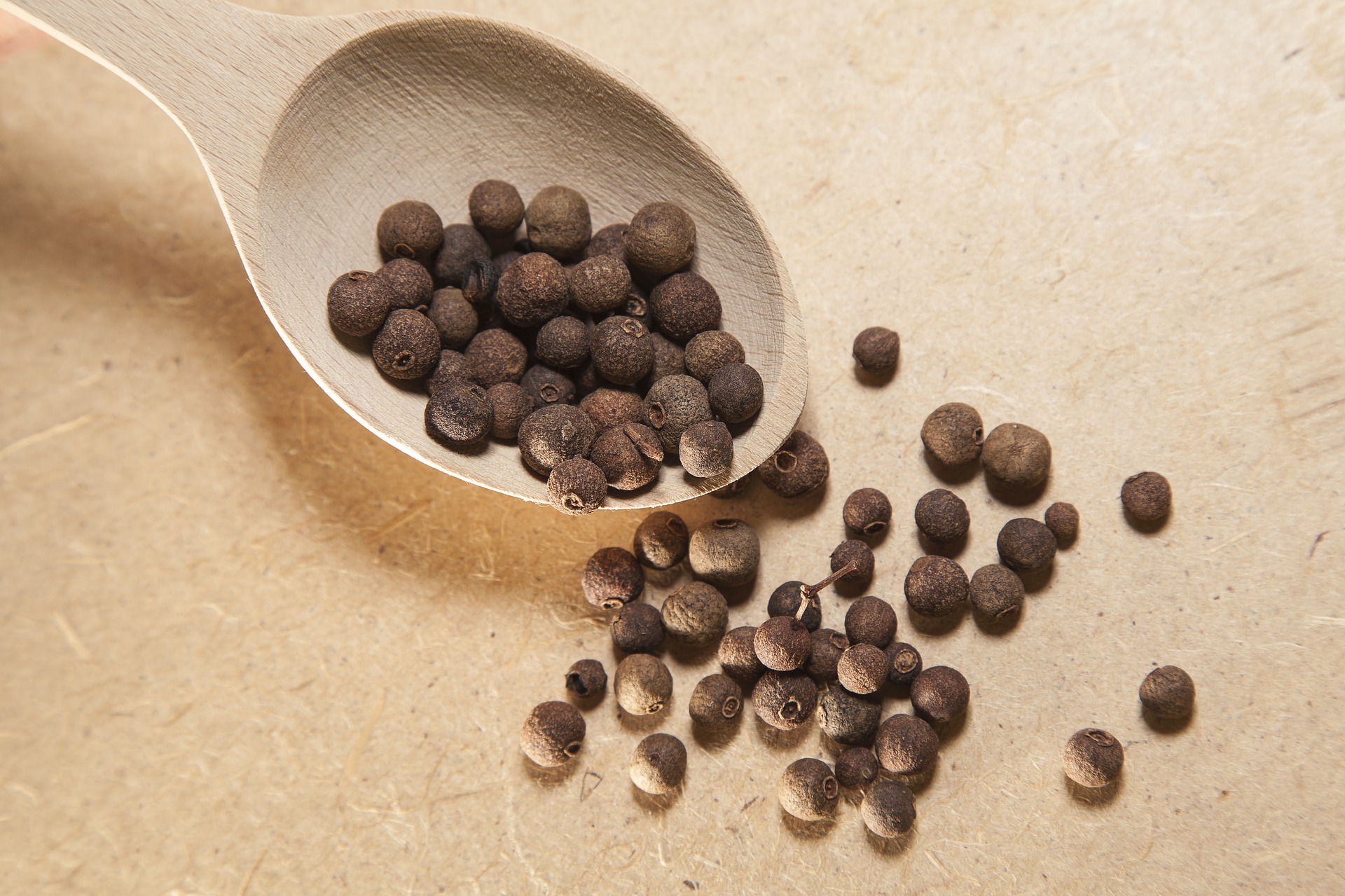
Allspice, also known as Jamaican pepper, is the dried fruit of the Pimenta dioica plant. The fruit is harvested when it is green and unripe and traditionally dried in the sun. Once dry, the fruit is brown and looks like large brown peppercorns. It comes from the West Indies, southern Mexico, and Central America and can be found in both dried fruit form and as a powder.

It is a pungent, aromatic spice that seems to embrace a combination of nutmeg, cloves, ginger, and cinnamon. In fact, that’s how it got its name. Whether in kernel or powdered form, it should be stored in a cool, dry place.

Allspice is an essential ingredient in Jamaican jerk seasoning. It’s used to flavor stews, meat dishes, and tomato sauce. You can also find it in pickling spice, spiced tea mixes, cakes, cookies, and pies. Food producers use it in ketchup, pickles, and sausages. Many patés, terrines, smoked and canned meats include allspice.

History:
Allspice comes to us from the Caribbean. Christopher Columbus discovered it during his second voyage and, thinking it was pepper, named it pimiento (Spanish for pepper). It was introduced to Europe and the Mediterranean soon after, although it only became popular in England where it became known as allspice because it seemed to be a combination of spices.

Jamaican allspice is considered superior to any other, but today it is also grown in Guatemala, Honduras, Mexico, Tonga, and Hawaii.

Medicinal Uses:
Allspice contains an oil called eugenol, which produces a warming effect. During the Napoleonic war, Russian soldiers would put allspice in their boots to keep their feet warm. As well as the warming effect, allspice also has a mild anesthetic, which makes it valuable as a home remedy for arthritis and sore muscles when used in a poultice. It can also be applied directly to the affected area for muscle pain and toothaches.

It has been used for indigestion, intestinal gas, abdominal pain, vomiting, diarrhea, fever, colds, high blood pressure, and diabetes. Allspice tea can be used to treat nausea or settle an upset stomach. Eating more allspice can be a low-risk treatment for easing the symptoms of menopause.


Recipes:

Wassail

Ingredients:
4 quarts apple cider
2 quarts orange juice
1 quart cranberry juice
2 cinnamon sticks
12 allspice (whole)
18 cloves (stuck into 1/2 a large orange)
1/2 cup(s) brown sugar (or to taste)

Instructions:
Bring all to a vigorous boil for 5 or so minutes then reduce to low simmer for 45 minutes to 1 hour. Sprinkle ground nutmeg and cinnamon on top of the finished Wassail. This is much better the next day when spices have blended and mellowed.


Jerk Chicken

Ingredients:
1 onion, coarsely chopped
1/2 cup chopped scallion
1/2 teaspoon dried thyme
1 teaspoon kosher salt
2 teaspoons sugar
1 teaspoon ground allspice
1/2 teaspoon ground cinnamon
1/2 teaspoon ground nutmeg
1 teaspoon freshly ground black pepper
1 small hot pepper, seeded, finely chopped
2 tablespoons soy sauce
1 tablespoon cider vinegar
1 tablespoon vegetable oil
1 whole chicken, cut into 8 pieces

Directions:
Combine all ingredients (except chicken) in a food processor, and process until a smooth puree forms.
Put chicken in a large bowl and pour marinade over. Stir chicken pieces to coat completely; cover and marinate at least 6 hours or up to overnight in the refrigerator.
Prepare a gas or charcoal grill on medium heat (350 F to 375 F) for direct/indirect grilling.
Remove chicken from jerk marinade. Place chicken skin-side down on the direct side of the grill.
Cover and cook for 15 minutes until the skin is charred and crisp, controlling any flare-ups on the grill. Turn the chicken over and move to the indirect side. Close the lid, and cook an additional 10 to 20 minutes, removing pieces as they become done.

Oven Method:
Jerk chicken is best done on the grill, but if this isn’t possible you can cook it in the oven (although the taste will be milder).
Prepare marinade and chicken as above.
Preheat oven to 350°F. Place chicken pieces in a rimmed baking pan, skin side up. Roast until chicken halves are cooked through, about 40-50 minutes.

Wednesday, September 22, 2021

Spice of Life Part IV
Nutmeg


Description:
Nutmeg comes to us from Indonesia, from the dried seeds of the Myristica fragrans, a tropical evergreen tree. It can be purchased whole or in powdered form. Grating the seed directly imparts a fresher, cleaner taste than the powder. Whole nutmeg will stay fresh indefinitely, but like the powder should be stored in an air-tight container away from heat, light, and moisture.

Nutmeg can be used in both sweet and savory dishes. It has a pungent aroma and a warm, slightly nutty, slightly sweet taste. It’s featured in many baked goods as well as puddings, potatoes, meats, sausages, sauces, vegetables, and such beverages as eggnog, coffee, and hot chocolate. Sprinkle it over oatmeal or other breakfast cereals, fruit, pumpkin, sweet potatoes, or winter squash.

History:
Evidence suggests that nutmeg was brought to Constantinople by Arab traders as early as the 6th century. The source of the spice, the Banda Islands, part of the Maluku Island chain, was a closely guarded secret.

In the late 1400s the Ottoman Turks took control of the land trade routes, which prompted several European countries to search for the source of the spice. The Portuguese discovered the Banda Islands in the early 1500s, torturing and killing the Bandalese in order to establish a monopoly.

The Dutch East India Company ousted the Portuguese in 1603, but the British managed to acquire seedlings and planted them in several British colonies in the East Indies. In the late 1700s the French smuggled nutmeg seedlings to their colony on Mauritius where they flourished, breaking the Dutch monopoly for good.

Medicinal Uses:
Nutmeg contains powerful antioxidants, and as such has anti-inflammatory properties which help protect against heart disease, diabetes, and arthritis. It has also been shown to have antibacterial properties that can inhibit the growth of harmful bacterial infections, including cavities and gum inflammation.

Precautions:
While nutmeg in small quantities is not only flavorful but beneficial to your health, taken in large doses it can have several adverse side effects – rapid heartbeat, nausea, disorientation, vomiting, and agitation. Taken in large quantities, one of its early uses was as a hallucinogen, but this can also be accompanied by loss of muscle coordination and organ failure.


Recipes:

Butterbeer

Ingredients:
1/2 cup heavy cream
1/2 teaspoon ground cinnamon
1/4 teaspoon ground nutmeg
2 tablespoons butterscotch sauce
1 tablespoon unsalted butter, softened
6 (12-ounce) cans vanilla cream soda, or one 2-liter bottle

Directions:
In a small bowl, combine the cream, spices, butterscotch, and softened butter.
Whisk for 2 minutes to mix. Avoid whipping it so long that it becomes whipped cream, but it should thicken and increase in volume slightly.
Place the bowl in the freezer for 15 minutes to give it a good chill. If not using immediately, cover the bowl and store in the refrigerator for at least 2 hours.

Assembling:
Fill a frosty glass about two-thirds full with cold vanilla cream soda.
Pour the chilled batter over the back of a spoon and into the glass. It will naturally rise to the top and float on the soda. Make this layer as thick as you like, but go slow because it will grow fast. Serve it with a straw or drink it straight from the glass (and experience the foamy mustache).

You want a frosty mug or tall glass for your butterbeer. For a quick chill, rinse each glass with cold water and place them in the coldest part of your freezer for at least 2 hours.


Nutmeg Cake

Ingredients:
3 eggs, room temperature
½ cup butter, softened
1 ½ cups white sugar
1 cup buttermilk
1 teaspoon vanilla extract
2 cups all-purpose flour
1 teaspoon baking powder
1 teaspoon baking soda
2 teaspoons ground nutmeg
¼ teaspoon salt
Caramel Icing:
½ cup packed brown sugar
3 tablespoons cream
¼ cup butter
1 ½ cups confectioners' sugar

Directions:
Preheat oven to 350 degrees F (175 degrees C). Lightly grease two 9-inch round cake pans.
Beat the butter and white sugar with an electric mixer in a large bowl until light and fluffy. The mixture should be noticeably lighter in color. Add the room-temperature eggs in three batches, blending them into the butter mixture fully. Stir in the vanilla.
Sift together the flour, baking powder, baking soda, nutmeg, and salt.
Pour 1/3 of the flour mixture into the bowl; mix just until incorporated. Stir in 1/2 the buttermilk, mixing gently. Continue adding the flour alternately with the buttermilk, mixing until combined. Spread the batter into the prepared pans.
Bake in the preheated oven until a toothpick inserted in the center of the cakes comes out clean, about 25 to 30 minutes. Let the cakes cool in the pans for 10 minutes, then invert them on a wire rack to cool completely before icing.

Caramel Icing: In a medium saucepan, heat the brown sugar, cream or milk, and 1/4 cup butter until it boils. Boil for 2 minutes, then remove from heat. Let cool. Stir in confectioner's sugar and beat until smooth. Add more cream or milk or confectioner's sugar as needed to achieve desired spreading consistency. Makes about 1 1/3 cups.

Wednesday, September 15, 2021

Spice of Life Part III
Ginger


Description:
Ginger got its name from the Sanskrit word srngaveram, which is a description of the root meaning “horn body.” Ginger grows best in warm, humid climates. Mature plants are typically 2 to 3 feet high with long spikey leaves and yellow flowers. Harvesting is done by simply lifting the rhizomes from the soil. The rhizomes vary in colour from dark yellow to light brown.

Ginger has a slightly biting, peppery taste. It can be used in both sweet and savoury dishes. It’s used in curries, baking, sauces, breads, drinks, and soups, and is excellent in meat, vegetable, fish, and poultry dishes.

Fresh ginger can be substituted for ground ginger at a ratio of six to one, but the flavours differ slightly. Ginger comes fresh, dried, pickled, preserved is syrup, and crystallized. Fresh it can be chopped, sliced, crushed, or cut into matchsticks. Powdered ginger is typically used in baking.

History:
Ginger has been cultivated in tropical Asia for over 3,000 years. Although its exact origins are unknown. it’s believed to have originated in Southeast Asia and was one of the earliest spices to be exported to Europe. It was valued for its medicinal properties as much as for its culinary purposes in China, Ancient Greece and Rome, the Middle East, and the Mediterranean.

The Spanish took it with them to the West Indies where they established a flourishing ginger trade between Jamaica (under Spanish rule) and Europe. Both raw and preserved ginger was a big import into Europe during the Middle Ages. By the 14th century, a pound of ginger cost the same as a sheep in England.

Today, India is the largest producer of ginger.

Medicinal Uses:
Ginger has been used in folk medicine since ancient times. Sweetened with palm tree juice, it was used in Burma to prevent the flu. In Japan it was used to help the circulation of blood. In India it was made into a paste and applied to the temples to relieve a headache

In more modern usage, the most common medicinal use for ginger is to relieve nausea and vomiting. This includes everything from morning sickness to sea sickness. It also has anti-inflammatory properties that are effective for pain relief and reducing swelling and discomfort from osteoarthritis and rheumatism. A little ginger can help alleviate a unsettled stomach when you’ve overindulged. It’s also effective to combat a cold or flu because it’s a natural diaphoretic, which means it will make you sweat. Some studies also indicate it might be effective in lowering glucose levels in Type II Diabetes and encourage weight loss.

But although it’s recognized as safe, ginger can also have several adverse effects. If you find you’re allergic to it you might end up with a rash. It can also cause heartburn, especially if it’s taken in powdered form. It can also adversely affect people with gallstones and interfere with blood thinners.


Recipes:

Ginger Hot Toddy

Ingredients:
2 cups water
1 1/2-inch piece ginger root, thinly sliced
4 cloves
1 lemon, halved
4 tbsp honey or maple syrup
2 ounces rum or whiskey
Lemon slices, as garnish

Instructions:
In a medium saucepan, add water, ginger root slices and cloves. Squeeze lemon juice into the saucepan, adding lemon halves into the liquid. Bring to a boil over high heat, and then reduce to medium heat for a gentle boil. Cook for 10 to 20 minutes. Strain into two mugs; add 2 tbsp honey or maple syrup and 1 ounce rum or whiskey to each mug. Garnish with lemon slices and serve.


Old Fashioned Gingerbread

Ingredients:
2 cups flour
1 ½ teaspoon baking soda
½ teaspoon salt
½ cup sugar
1 teaspoon ginger
1 teaspoon cinnamon
½ tsp cloves
½ cup soft butter
¾ cup molasses
1 egg
1 cup boiling water

Instructions:
Preheat oven to 350 F
Grease and flour a 9 by 5 loaf pan (or line the pan with parchment paper.) *
Sift together dry ingredients in a large bowl.
Add the butter, molasses and egg and beat for two minutes
Add the boiling water.
Beat for another two minutes and turn into prepared pan.
Bake 50-55 minutes, or until loaf springs back when lightly touched.

*Add some extra sugar and spice to the flour before sprinkling it in the greased pan to give the bread a little extra flavour.

Wednesday, September 8, 2021

Spice of Life Part II
Cinnamon


Description:
This delicately fragrant, brown spice has a warm, sweet flavour. Cinnamon is native to Sri Lanka, Burma, and the Malabar Coast of India, and is also grown in South America and the West Indies. It comes from the inner bark of the Cinnamomum tree. The outer bark of the tree is peeled away from the branches and the inner bark is rolled into quills, about one inch in diameter.

It comes to us dried, either rolled into sticks or ground into powder and is best kept in an airtight container in a cool, dark place. In Europe it’s mainly used in sweets, and in the Middle East it’s used in meat stews, especially those made with lamb.

It’s used in cakes, puddings, cookies, and bread, and can also added to meat and game stews, vegetables, stewed fruit, and curries. It can be sprinkled in coffee or tea and is delicious in hot chocolate.

History:
Cinnamon is one of the oldest known spices, dating back as far as Ancient Egypt where it was used in embalming and religious ceremonies. It was brought to Europe by Arab traders who kept their source a secret in order to protect their control over it. Because cinnamon was transported via land routes that were difficult to traverse, it was very expensive. Its high cost made it into a status symbol in Europe. Along with being a sign of wealth, cinnamon was also popular because of its ability to preserve meat in the winter.

It was the most profitable spice in the Dutch East India Company trade, so much so that in the 17th century they seized the island of Ceylon from the Portuguese and then arranged to have the cinnamon sources along the coast of India destroyed so they could keep a monopoly on it. The French later seized Ceylon from the Dutch, then England seized it from the French. At that point other countries found it could be easily grown in other tropical climates, thus breaking the monopoly.

Medicinal Uses:
Medieval physicians used cinnamon in medicines to treat coughing, hoarseness, and sore throats.

Cinnamon is rich in antioxidants, which have anti-inflammatory properties that help protect against disease. Its pre-biotic properties promote gut health and help fight bacterial and fungal infections. There is some evidence that suggests it can help lower blood pressure, and it has proven effective in lowering blood sugar levels in type 2 diabetes.

Recipes:

Mexican Hot Cocoa

Ingredients:
1 cup unsweetened cocoa powder
1 teaspoon ground cinnamon (plus more for garnish)
1/4 teaspoon fine sea salt
1 pinch cayenne pepper
3 cups milk
2 tablespoons honey
1 finely grated orange zest
1/4 teaspoon vanilla
1/4 cup heavy cream
1 tablespoon honey

Directions:
In a medium saucepan, whisk together cocoa powder, cinnamon, salt, and cayenne. Whisking constantly, add milk in a thin stream until combined. Whisk in honey and orange zest.
Heat over medium, whisking occasionally, until mixture is steaming and bubbles start to appear on the sides of the pan. Remove from the heat and whisk in vanilla.
In a medium bowl or the bowl of a stand mixer fitted with the whisk, beat cream and on medium speed until cream is softly whipped.
To serve, divide cocoa between 4 mugs, top each with 1 tablespoon whipped cream, and sprinkle with cinnamon.


Cinnamon Chicken

Ingredients:
1 1/2 cups dry sherry
1 teaspoon cinnamon
1/2 cup honey
1/4 cup lemon juice
4 cloves garlic, minced
1 teaspoon salt
1/2 teaspoon freshly ground black pepper
1 frying chicken, 2 1/2 to 3 pounds, cut into pieces
2 tablespoons vegetable oil

Directions:
First make marinade.
In a medium size bowl, mix the dry sherry, cinnamon, honey, lemon juice, garlic, salt and pepper. Add the chicken and toss to a evenly coat. Cover and marinate in the refrigerator 8 hours, or overnight.

To cook, preheat the oven to 350 degrees.
Remove the chicken, shaking off excess marinade. Pour the marinade into a small saucepan and bring to a boil. Boil until it begins to thicken and about 1 cup remains, 5 to 10 minutes.
Heat the oil in an ovenproof skillet over medium high heat. Sear the chicken until golden on both sides. Pour the reduced marinade over the chicken and place in the oven.
Bake about 20 minutes and serve.

Wednesday, September 1, 2021

Spice of Life Part I
Turmeric


Description:
This brilliant golden yellow spice, also known as Indian Saffron, is available in fresh, dried, or powdered form.

It adds a mild aroma and distinctive yellow colour to foods. It has a warm, slightly bitter taste like black pepper and is most often used to flavour or colour mustards, butters, and cheeses. A member of the ginger family, turmeric comes from the underground rhizome of the plant and is essential to curry powder.

Turmeric can be used to enhance many foods such as pilafs, poultry, fish, pickles, chutneys, deviled eggs, bean and lentil dishes, and vegetable dishes, especially cauliflower and potatoes. It also makes a flavourful tea or latte.

History:
It was first used in Southeast Asia as a dye to colour the robes of monks and priests yellow. The use of turmeric as a culinary spice dates back almost 4,000 years to India, where it also had some religious significance. It spread to China, Africa, and Jamaica, and Marco Polo described it as exhibiting qualities similar to saffron. It has a long history of medicinal use in South Asia, and is believed to be one of the ancient Persian yellow spices associated with sun worship.

Medicinal Uses:
In the last few years turmeric, or more precisely its main component curcumin, has been gaining popularity for its medicinal benefits.

Curcumin is known for its powerful anti-inflammatory properties and is often used to relieve osteoarthritis. It’s also an effective aid in the treatment of depression, type 2 diabetes, lowering cholesterol, and relieving PMS symptoms. It has been used in headache treatment, especially for migraines, and one study has shown it can help ward off heart attacks in those who’ve had bypass surgery. Turmeric tea can also help ward off a variety of viruses, including the flu and COVID-19

Recipes:

Golden Milk Turmeric Tea
(for health benefits)

Ingredients:
1 cup unsweetened non-dairy milk, preferably coconut milk beverage or almond milk
1 (3-inch) cinnamon stick
1 (1-inch) piece turmeric, unpeeled, thinly sliced, or 1/2 teaspoon dried turmeric
1 (1/2-inch) piece ginger, unpeeled, thinly sliced
1 tablespoon honey
1 tablespoon virgin coconut oil
1/4 teaspoon whole black peppercorns
Ground cinnamon (for serving)

Directions:
Whisk coconut milk, cinnamon, turmeric, ginger, honey, coconut oil, peppercorns, and 1 cup water in a small saucepan; bring to a low boil. Reduce heat and simmer until flavours have melded, about 10 minutes. Strain through a fine-mesh sieve into mugs and top with a dash of cinnamon.

Golden milk can be made 5 days ahead. Store in an airtight container and chill. Warm before serving.


Spiced Jasmine Rice Pilaf

Ingredients:
2 tablespoons olive oil
½ medium onion, finely chopped
½ small fennel bulb, finely chopped
¼ cup coarsely chopped fennel fronds
2 garlic cloves, finely chopped
Kosher salt and freshly ground black pepper
¼ teaspoon ground coriander
¼ teaspoon ground turmeric
1 cup uncooked jasmine rice
1½ cups low-sodium chicken stock
¼ cup chopped unsalted, roasted almonds, divided
2 tablespoons coarsely chopped fresh cilantro

Directions:
Heat oil in a medium saucepan over medium-high. Add onion, fennel, and garlic, season with salt and pepper, and cook, stirring often, until onion is softened and translucent, 5–8 minutes. Add coriander and tumeric and cook, stirring, until fragrant, about 30 seconds. Add rice and cook, stirring often, until some grains are translucent, about 3 minutes.

Add stock, season with salt and pepper, and bring to a boil. Reduce heat, cover saucepan, and simmer until rice is tender and liquid is absorbed, 12–15 minutes. Remove pan from heat and fluff rice with a fork. Cover with a clean kitchen towel, then lid. Let sit 10 minutes.

Stir in fennel fronds and half of almonds. Top with cilantro and remaining almonds.

Serves 4

Wednesday, January 6, 2021

Superstitions XI – Itching Palms

Originally, this series was supposed to end with the New Year’s post. But as usually happens when holidays do not conveniently fall on a weekend, my days got kind of mixed up in my head. Yesterday I suddenly realized it was Tuesday and I needed a post for the next day. Oops!

When I did what I thought was going to be a little research, I was surprised at just how many superstitions about itchy palms there are.


Right to receive and left to leave
rub on wood and it's sure to be good,
rub on brass and it will come fast.


The ancient Saxons and Celts believed an itchy palm brought good luck, but if you scratched it the luck would go away. The only way to keep it is to scratch your palm on a piece of wood.

The roots of the superstition can be traced back to the pre-Christian era. The Saxons believed that rubbing silver on your skin was a cure for many diseases, so they would rub an itchy palm with silver. This eventually became the superstition that silver was coming your way. This belief was later adopted by Roman fortune tellers and turned into the version we know today.

If your left hand itches:
- you’re likely to become rich.
- indicates you’ll be on the receiving end of several opportunities.
- means you’ll be on the receiving end of a fight.
- quickly scratch it on wood and you’ll receive money.

If your right hand itches:
- don’t scratch it or you’ll lose money.
- you’ll meet someone new
- you’ll shake hands with a stranger.
- you should clean house – company’s coming.
- a friend you haven’t seen in a long time is coming to pay a call.
- it means you want to give someone a beating.
- news from afar or a letter is coming your way, but you’ll have to spit in your palm to receive it.
- money is coming, but to get it you’ll have to shove your hand in your pocket. If you don’t, the money will never come.

There is also the belief that itchy palms are an indication of some kind of internal energy. The right hand indicates active energy and the left hand is passive, or receptive. So if your right palm itches it means the energy is moving outward, and if the left one is itchy it means you are receiving energy.

Or an itchy palm might just mean you’ve got a bad case of eczema or you’ve touched something you’re allergic to. Better check with your doctor, just in case.

Wednesday, September 30, 2020

By the Light of the Moon – Part One


Seeing as tomorrow night is a full moon, I thought this might be a good time to talk about the moon a bit.

Called Luna by the Romans, and Selene or Artemis by the Greeks, it was likely created more than 4.5 billion years ago when a large object collided with the Earth. The impact would have blasted out rocks to orbit around the Earth, which were drawn together and over time melted into one another. As they cooled down, they became the moon.

A Few Interesting Facts About The Moon:

It is 384,400 kilometres from Earth.
Its diameter is 3,476 kilometres.
Its gravitational force causes the rise and fall of the tides of Earth’s oceans.
The moon is moving away from the Earth at the rate of 3.8 cm a year.
You weigh 16.5% less on the moon than you do on Earth.
A total of 382 kilograms of rock samples have been taken from the moon by the Apollo and Luna space programs.
The phases of the moon are caused by the relative positions of the moon, sun, and Earth and occur on a 29.5 day cycle. These phases are:
New Moon
Waxing Crescent Moon
First Quarter Moon
Waxing Gibbous Moon
Full Moon
Waning Gibbous Moon
Last Quarter Moon
Waning Crescent Moon
Crescent is when the moon is less than half illuminated.
Gibbous refers to phases where the moon is more than half illuminated.
Waxing is "growing" or expanding in illumination
Waning is "shrinking" or decreasing in illumination. .

The Harvest Moon is the full moon closest to the autumnal equinox (which September 21). This moon can occur either in September or October. This marks the time of year when crops such as corn, pumpkins, squash, and wild rice are ready to be gathered.

A Blue moon occurs when there are two full moons in a month. The first full moon goes by the name normally assigned to that month’s full moon, but the second one is commonly called a Blue Moon. Blue Moons occur about every 2 ½ years. This year, September’s full moon is the Corn Moon with the first full moon in October being the Harvest Moon and the second full moon being both the Blue Moon and the Hunter’s Moon.

A month is considered to have a Black Moon when there is no full moon at all. This can only occur in the month of February because the month only has 28 (or 29 on a leap year) days. By this definition it only happens once every 19 years. The last Black Moon was in 2014 and the next one is due to occur in 2033.

However, it is also accepted that a Black Moon occurs in a month that has two new moons. These occur approximately every 29 months and the last once was in July, 2019. Rarer still, if you divide the year into seasons there are three new moons to a season, but if there is fourth one, then the third one is considered a Black Moon. This occurs once every 33 months.

Come back next week when I’ll share a bit about the individual months and what their full moon is called.

Wednesday, August 19, 2020

Astrology Part Eight - Scorpio


Quick facts for Scorpio:
You were born between October 24 and November 22
Your sign is the scorpion
Your planet is Mars
Your element is water
Your metal is iron
Your birthstone is the topaz
Your flower is the chrysanthemum
Your color is red
Your body part is the genitals
Your Tarot card is Death

Strengths:
Resourceful, brave, passionate, stubborn, a true friend

Weaknesses:
Distrusting, jealous, secretive, violent

Likes:
Truth, facts, being right, longtime friends, teasing, a grand passion

Dislikes:
Dishonesty, revealing secrets, passive people

Your best matches are those born under the sign of Cancer or Pisces, and to a lesser degree those born to Virgo and Capricorn.

* ~ * ~ * ~ * ~ *

Scorpio is ruled by Mars, the planet of courage, energy and activity. People born to this sign are passionate and assertive, often uninhibited and impatient. Though they are also known for being calm and cool, they would rather be active than sit around doing nothing. The sign of Scorpio governs the genitals, giving this sign the reputation of being the most sexual of the signs. But they also crave physical closeness, spiritual illumination, and emotional intimacy.

Being very dedicated to what they do, Scorpios make excellent leaders. Their curiosity is vast, making them great investigators. They’re determined and decisive, and have a positive attitude that makes them very thorough. To them, work is a pleasurable pastime and they take offense when anyone tries to turn their work into a burden. They know what they want and aren’t afraid to work hard to get it, although their need to be in control can make them a little overbearing.

Scorpio is great at keeping secrets and if there’s a mystery afoot you can count on Scorpio, with their keen sense of intuition, to get to the bottom of it. Their world tends to be black and white and they have little use for the shades of grey between. They hate dishonesty and can be very jealous and suspicious. Scorpio is always plotting several steps ahead, and like their spirit animal, they will sting when least expected.

Famous Scorpios include: Katy Perry, Christopher Columbus, Hillary Clinton, Bill Gates, Leonardo DiCaprio, Pablo Picasso, Katherine Hepburn, Bob Ross, Marie Antoinette, Whoopi Goldberg, Julia Roberts, Matthew McConaughey, and Joaquin Phoenix

Tuesday, February 5, 2019

Guo Nian Hao


Happy Year of the Earth Pig!

I’ve been saying all along that I’ve been waiting for the Chinese New Year to get my head back in the game. I guess now’s the time to see if it works. :-)

As most people know, I have a bit of a fondness for fortunes and fortunetelling. A long time ago I used to read the Tarot cards, mostly for fun although one year when the hubby’s band was playing on Halloween I dressed as a gypsy and told fortunes between sets for drinks.

Unfortunately I didn’t keep it up and my skills are a little rusty now. I still, however, would like to design my own Tarot deck some day. I have written a series of articles on fortune telling, as well as a small book (that I printed a single copy of). And one year, for Christmas, I gave a few friends a bag of hand made runes with an instruction book to go with them. As I recall, the books were rather crudely bound as I had no idea what I was doing at the time. LOL

But back to the Chinese Zodiac.

For many years I labored under the mistaken impression I had been born under the year of the Pig. This is because I was following the Western version of the zodiac. The true version is based on the Chinese lunar cycle and their new year does not begin on January 1st, but on the second new moon after the winter solstice.

This means anyone born in January or early February might not be the sign they think they are. If you’re not sure, you can check the calculator HERE.

I’ve actually done a fair amount of research on the Chinese Zodiac, but do you think I can find any of it now? Of course not. One of the joys of not having your writing organized.

A few years ago, on my other blog, I did several series of non-fiction articles. I had fun doing them but eventually I ran out of topics (I think I was kind of scraping the bottom of the idea barrel when I did the series on cheeses of the world). But I’m left wondering what I should do with all that information.

Should I add a non-fiction page to my blog and provide links to the original articles? Maybe reprint them on this blog as a kind of non-fiction day? Print them out and put them in a binder? I mean let’s face it, I put a lot of work into those articles and it would be a shame to just let them go to waste. Maybe it would even inspire me to do something new.

You just never know.